

Kalaripayattu in Kerala is an ancient martial tradition combining physical conditioning, weapon training, unarmed combat and traditional healing practices. Travellers can watch live Kalaripayattu performances across Kerala, particularly in Thekkady, Munnar, Kochi and Thiruvananthapuram. This guide covers the best places to watch Kalaripayattu, along with show timings, ticket prices and locations
ALSO SEE – The Rich Culture Of Kerala: Art Forms, Dance, Festivals, Food & More
What is Kalaripayattu in Kerala?
Kalaripayattu is one of Kerala’s oldest martial arts. Traditional accounts describe a history extending back thousands of years, although its exact historical origin remains uncertain.
The word kalari means a specialized place or arena where students are trained daily, and payattu means the rigorous practice of fighting or executing combat maneuvers with intensity.
Traditionally, the sage Parshurama is credited with establishing the original fighting techniques and traditions. All the types and styles heavily incorporate animal postures such as lion, elephant, cobra, and tiger. It also emphasizes extreme physical flexibility, weapon mastery, fluid footwork, and total mental discipline. This is best for those travellers who are martial arts enthusiasts

Kalaripayattu in Kerala: Best Places to Watch, Show Timings & Ticket Prices
In Kerala, there are several historical centres and cultural theatres that host daily performances for international visitors.
| Kalari / Centre | Location | Show Timing | Ticket Price | Duration | Best For |
|---|---|---|---|---|---|
| Kadathanadan Kalari Centre | Thekkady | Evening shows | ₹300 + GST | About 1 hour | First-time visitors and live combat demonstrations |
| Punarjani Traditional Village | Munnar | 6:00 PM – 7:00 PM | ₹200–₹300 | 1 hour | Kathakali and Kalaripayattu together |
| Kerala Kathakali Centre | Fort Kochi | 7:15 PM – 8:00 PM | ₹400 | About 45 minutes | Travellers staying in Fort Kochi |
| C.V.N. Kalari | Thiruvananthapuram | Usually 7:00 AM – 8:00 AM; confirm in advance | Contact venue | About 1 hour | Traditional training and serious martial arts enthusiasts |
| Kalari Kshethra | Munnar | 6:00 PM – 7:00 PM | Around ₹300 | About 1 hour | Evening cultural performances |
| Kalariyil Dharmikam Ashram | Parassala, Thiruvananthapuram | Arrange in advance | Contact the ashram | Varies | Traditional practice, healing and meditation |
| Ekaveera Kalaripayattu Academy | Alappuzha | Advance booking required | Contact the academy | Varies | Training sessions and special demonstrations |
| Greenix Village | Fort Kochi | 4:00 PM – 5:00 PM | Contact venue | About 1 hour | Multiple Kerala performing arts in one venue |
| Mudra Cultural Centre | Thekkady / Kumily | Around 6:00 PM | Approximately ₹200–₹300 | About 1 hour | Kalaripayattu and Kathakali performances |
Price and timing last verified: September 2026. Shows and rates can change; confirm before travelling.
1. Kadathanadan Kalari Centre (Thekkady)
Kadathanadan Kalari is a famous center with a specially constructed gallery surrounded by an authentic earthen arena. Here, visitors can watch highly trained trainers engaged in intense weapon duels from a safe distance. In this Kadathanadan Kalari Centre, the show runs daily in the evening hours and includes fire-jumping routines and stunts. The centre also provides English commentary to explain each historic combat ritual to the visitors who are specially visiting from abroad just to watch the show.

| Location | Thekkady |
| Show Timing | Evening shows |
| Ticket Price | ₹300 + GST per person |
| Duration | About 1 hour |
| Address | Thekkady Road, Kumily, Idukki, Kerala 685509 |
2. Punarjani Traditional Village (Munnar)
This traditional centre is located in the cool hills of Munnar. This venue offers you a combination of cultural performances everyday in the evening. Here, visitors can experience both Kathakali dance and intense Kalaripayattu combat routines together. In this centre, the performers demonstrate remarkable speed and weapon control, and physical endurance during the show. If you want to experience the show, then booking your tickets in advance is strongly recommended, especially during the peak holidays.

| Location | Munnar |
| Show Timing | 6:00 PM – 7:00 PM |
| Ticket Price | ₹200–₹300 per person, depending on seating |
| Duration | 1 hour |
| Address | 2nd Mile, Pallivasal, Munnar, Kerala 685565 |
3. Kerala Kathakali Centre (Fort Kochi)
Kerala Kathakali Centre is located in Fort Kochi; this cultural hall hosts regular martial arts showcases. The best part of the show is that they have a daily one-hour evening performance, in which they show the highlights- foundational stances, wooden weapons, and steel blades. In this show, masters try to explain the spiritual philosophy and Ayurvedic healing principles underlying the physical training. This venue is within walking distance from colonial sights and hotels. If you want to watch Kathakali, you may visit here for the best experiences.
ALSO SEE- Kathakali Dance-From which State, Images, Costume, Face, Dress etc

| Location | Fort Kochi |
| Show Timing | 7:15 PM – 8:00 PM daily |
| Ticket Price | ₹400 per person |
| Duration | About 45 minutes |
| Address | KB Jacob Road, Fort Nagar, Fort Kochi, Kochi, Kerala 682001 |
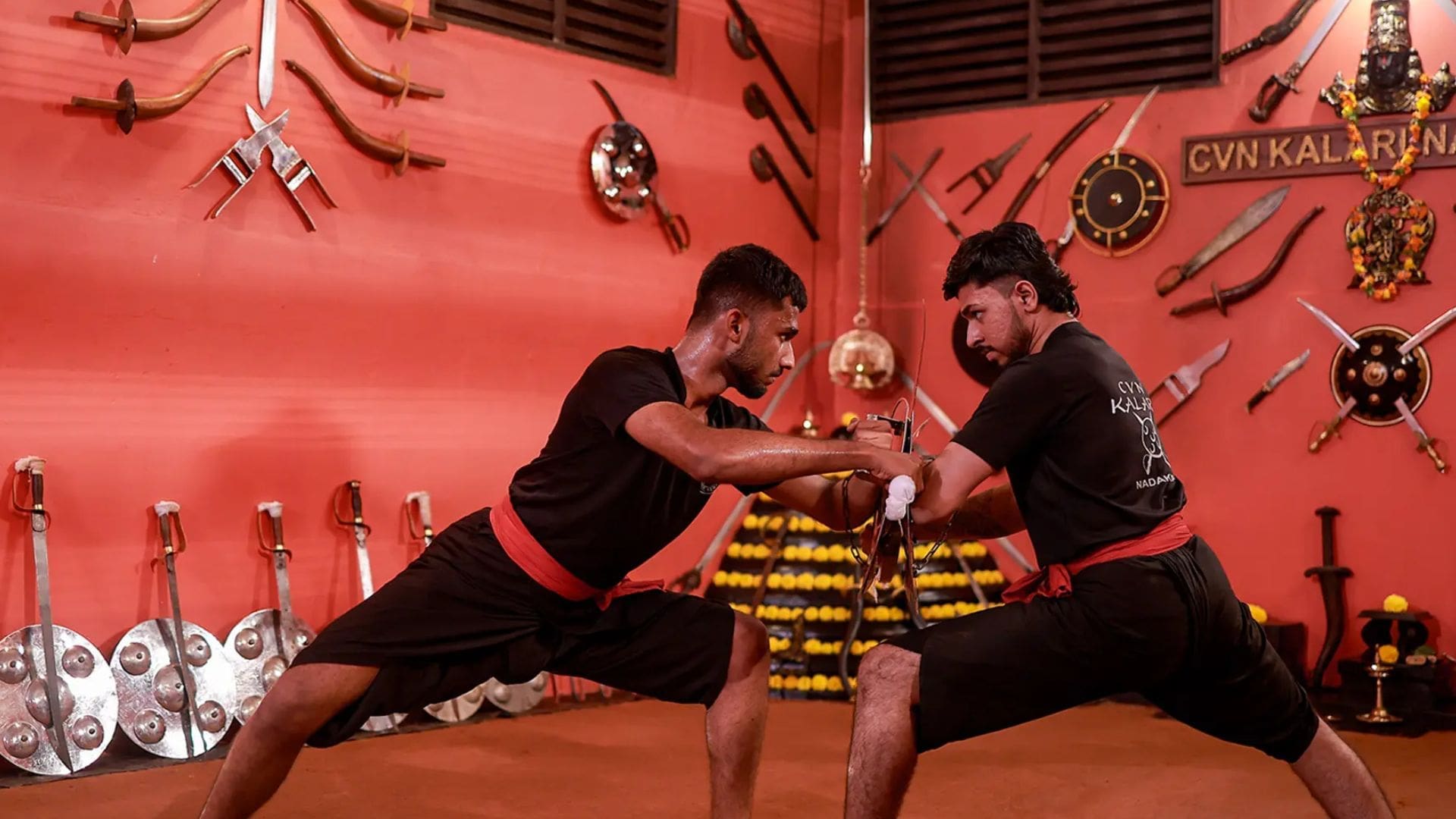
4. C.V.N. Kalari Thiruvananthapuram
C.V.N. Kalari mainly focuses on preserving pure classical combat traditions rather than commercial entertainment. Here, visitors can watch the early practice session of the students under the supervision of a senior master. The very serious martial artists can apply here for a short team workshop and treatment therapies.

| Location | Thiruvananthapuram |
| Show Timing | Usually 7:00 AM – 8:00 AM; confirm in advance |
| Ticket Price | Contact venue |
| Duration | About 1 hour |
| Address | East Fort, Fort P.O., Thiruvananthapuram, Kerala 695023 |
5. Kalari Kshethra, Munnar
Kalari Kshethra is one of the popular places to watch Kalaripayattu in Munnar. The centre presents an energetic one-hour martial arts performance featuring traditional weapons, combat movements and skilled demonstrations. Visitors can also watch a Kathakali performance before the Kalaripayattu show.
ALSO SEE – Best Places to watch Kathakali in Kerala

| Location | Munnar |
| Show Timing | 6:00 PM – 7:00 PM |
| Ticket Price | Around ₹300 per person |
| Duration | About 1 hour |
| Address | Kochi Road, Chithirapuram South, Munnar, Kerala 685565 |
6. Kalariyil Dharmikam Ashram, Thiruvananthapuram
Kalariyil Dharmikam offers visitors a deeper look at Kalaripayattu as a traditional discipline connected with healing, meditation and Kerala’s martial culture. Rather than operating mainly as a tourist theatre, the ashram provides opportunities to observe traditional practice and learn about Kalari Chikitsa in a peaceful setting.

| Location | Parassala, Thiruvananthapuram |
| Show Timing | Visits and demonstrations should be arranged in advance |
| Ticket Price | Contact the ashram |
| Duration | Varies according to programme |
| Address | Parasuvaikkal P.O., Parassala, Thiruvananthapuram, Kerala 695508 |
7. Ekaveera Kalaripayattu Academy, Alappuzha
Ekaveera Kalaripayattu Academy is a good option for travellers who want to see traditional Kalari training beyond Kerala’s regular tourist performance centres. The academy teaches different regional styles of Kalaripayattu and can organise special demonstrations and training sessions for visitors with advance notice.

| Location | Alappuzha |
| Show Timing | Special shows available with at least one day’s advance notice |
| Ticket Price | Contact the academy |
| Duration | Varies according to demonstration or training session |
| Address | Punnapra, near Carmel Engineering College, Alappuzha, Kerala |
8. Greenix Village, Kochi
Greenix Village in Fort Kochi is a convenient choice for travellers who want to experience several Kerala performing arts in one location. Its cultural programme includes Kalaripayattu along with Kathakali and other traditional art forms, making it easy to combine a martial arts show with an evening of Kerala culture.

| Location | Fort Kochi |
| Show Timing | Kalaripayattu: 4:00 PM – 5:00 PM |
| Ticket Price | Contact the venue for the latest rate |
| Duration | About 1 hour |
| Address | Kalvathy Road, Fort Kochi, Kochi, Kerala 682001 |
9. Mudra Cultural Centre, Thekkady
Mudra Cultural Centre is another convenient place to watch Kalaripayattu while staying in Thekkady. The evening performance showcases martial movements, weapon techniques and traditional combat skills in a purpose-built viewing area, and visitors can also combine the experience with a Kathakali show.

| Location | Thekkady / Kumily |
| Show Timing | Kalaripayattu: around 6:00 PM |
| Ticket Price | Approximately ₹200–₹300 per person; verify current rate |
| Duration | About 1 hour |
| Address | Mudra Cultural Centre, Thekkady Road, Kumily, Kerala 685509 |
*Show schedules and ticket prices can change, particularly during peak tourist seasons.
Travellers should confirm the latest timing and admission rate directly with the venue before visiting.
Key Weapons Used in Kalaripayattu
Kalaripayattu training traditionally follows a gradual progression. Students first develop flexibility, balance and body control before moving to Kolthari, the practice of wooden weapons. They later advance to Ankathari, which involves metal weapons, and finally to Verumkai, or unarmed combat techniques.
Kettukari -Long Staff
Kettukari is a long wooden or bamboo staff used during the early stages of weapon training. Practitioners learn sweeping movements, strikes, blocks and footwork while maintaining distance from an opponent. Training with the long staff also helps improve coordination, speed and body control.
Cheruvadi – Short Stick
Cheruvadi is a shorter wooden stick used for faster, close-range movements. Training includes attacking, blocking and countering techniques while teaching practitioners to react quickly to an opponent’s movements.
Otta – Curved Wooden Weapon
Otta is a distinctive curved wooden weapon used at a more advanced stage of Kalaripayattu training. Its movements help students understand close-range combat techniques and prepare them for more complex weapon practice.
Vaalum Parichayum – Sword and Shield
The combination of vaal (sword) and paricha (shield) is one of the most recognizable forms of Kalaripayattu weapon training. Practitioners learn coordinated attack and defence techniques, using the shield to block strikes while responding with controlled sword movements.
Kuntham – Spear
The spear, traditionally known as kuntham, is used to practise thrusting, blocking, distance control and evasive footwork. Spear training requires good timing because practitioners must control both the reach of the weapon and the movement of their opponent.
Urumi – Flexible Sword
The urumi is one of the most distinctive weapons associated with Kalaripayattu. It consists of a long, flexible metal blade that can move in sweeping circular patterns. Because controlling the weapon requires exceptional coordination, awareness and skill, urumi techniques are generally associated with advanced practitioners.
Katara (Dagger) and Other Bladed Weapons
Advanced Ankathari training may also involve shorter bladed weapons such as daggers. These exercises focus on quick defensive reactions, close-range movement and precise control rather than simply physical strength.
Weapons in Kalaripayattu are therefore not taught only as fighting tools. Each stage of weapon training develops qualities such as balance, flexibility, coordination, timing, concentration and control, which are fundamental to the martial tradition.
Major Regional Styles of Kalaripayattu
Kalaripayattu is primarily associated with two major traditions: Vadakkan (Northern) and Thekkan (Southern). Some classifications also recognise Madhya Kalari, or the Central Kerala style, as a regional variation influenced by the major traditions.
1. Vadakkan (Northern Style)
The northern style aims to highlight its elegance through a combination of fluid body movement, high jumps, and the use of wooden and metal weapons for spectators who are fond of such exhibitions.
In the northern style, martial artists are expected to demonstrate different kinds of acrobatic movements at the same time as they deliver very accurate and precise strikes in the combat demonstration.
They make use of fast and fluid changes of body posture as the main means of attack and also resort to traditional medicinal oil massages to maintain their physical condition and to prepare their body for the training sessions.

2. Thekkan (Southern Style)
The Thekkan or Southern style places greater emphasis on close-range combat, fast hand techniques, footwork and techniques associated with marmas, or vital points of the body
Travellers interested in weapon-oriented, flowing movement may find the northern tradition especially interesting, while the southern tradition places greater emphasis on close-range and unarmed techniques

3. Madhya (Central Style)
Madhya (Central Style) blends the elements from both northern and southern fighting traditions. Usually the training begins on sunken earthen floors, which are designed to keep the fighters cool during practice sessions. This place can also be utilized for precise footwork patterns that are drawn inside the geometric floors to control balance.
ALSO SEE-The Rich Culture Of Kerala: Art Forms, Dance, Festivals, Food
Regional Styles Comparison
| Style Branch | Primary Focus | Key Weapons Used | Primary Region |
|---|---|---|---|
| Vadakkan | Acrobatics, High Jumps, Agility | Flexible Sword (Urumi), Staff | Malabar, Northern Kerala |
| Thekkan | Pressure Points, Empty Hand | Short Sticks, Daggers | Travancore, Southern Kerala |
| Madhya | Grid Footwork, Balanced Defense | Wooden Rods, Spears | Thrissur, Central Kerala |
Frequently Asked Questions
What is the oldest martial art in the world?
Kalaripayattu is widely regarded as one of the world’s oldest surviving martial traditions. Traditional accounts attribute an antiquity of around 3,000 years or more, although its exact historical origin remains debated
How much do Kalaripayattu show tickets cost in Kerala?
Typically, the cost of tickets is around two hundred to six hundred rupees per head. Usually, the price depends on the location and cultural show packages.
Can tourists take short-term Kalaripayattu classes in Kerala?
Yes, they can take classes. Some institutes offer a beginners’ workshop from one week to a month. If you really want to join the class, then booking an advance registration with a local gurukulam is required before starting physical training.
Is Kalaripayattu safe for children to watch live?
Kalaripayattu performances are commonly attended by families. However, shows may include weapons, fire demonstrations, loud sounds and fast combat sequences, so parents travelling with very young children should check the programme with the venue beforehand.
What is the flexible whip sword called in Kalaripayattu?
The flexible sword used in Kalaripayattu is called the urumi. It is an advanced weapon that requires considerable coordination, control and spatial awareness



Leave a Reply