

The backwaters of Kumbalangi near Kochi occasionally light up with flashes of electric blue, a natural phenomenon known locally as Kumbalangi Kavaru bioluminescence. Made famous by the Malayalam film Kumbalangi Nights, this glowing-water experience attracts visitors hoping to witness one of Kerala’s most unusual natural sights.
March to May is a commonly reported season for seeing Kavaru in Kumbalangi, with sightings sometimes beginning in February. Dark nights with little moonlight offer better viewing conditions, especially around the backwaters and pokkali fields of Kumbalangi and Chellanam.
However, Kavaru is unpredictable. The glow depends on the presence of bioluminescent microorganisms, local water conditions and available darkness. Even during the main season, sightings are not guaranteed.
This guide explains when and where to look for Kavaru, how to arrange a guided night visit, what to expect from kayaking, and how to improve your chances without relying on misleading guarantees.
What Is Kumbalangi Kavaru Bioluminescence ?
The locals of this region call this glowing wonder “Kavaru.” The word comes from the Malayalam origin – kavaruka – which roughly means “Captivating,” like something is captivating or even stealing your attention (or perhaps your heart). In scientific lingo, it is called bioluminescence: magnificent light produced by tiny organisms found in water, mostly dinoflagellates, through a process of chemical reaction involving luciferin and luciferase.
If you disturb the water with your hand or by a stroke of your paddle, the tiny organisms flash their light. It’s not magic, though; the flashing of light actually works as a defence mechanism for these organisms.
Fishermen in Kumbalangi regions witnessed this phenomenon long before the movie Kumbalangi Nights came out in 2019. The directors of the film themselves have remarked that crew members and locals had seen it for years out on the water in the dark. What the movie actually did was make outsiders aware of something they had never heard of. Funnily enough, for the local fishermen, this is just a normal thing.
Kumbalangi Kavaru: Quick Visitor Guide
| Visitor Information | Details |
|---|---|
| Best Season | March to May, sometimes February |
| Best Time of Night | After dark, preferably when the moon is below the horizon |
| Best Moon Phase | New moon or minimal moonlight |
| Best Locations | Areas around Kumbalangi, including Kallanchery, Anjilithara and Kulakkadavu, are worth checking during Kavaru season. However, the best viewing point can change, so confirm recent sightings with a local guide before travelling |
| Ideal Weather | Clear, calm nights without heavy rain or strong winds |
| Viewing Experience | Guided kayaking, traditional boat rides or shore viewing |
| Kayaking / Boat Cost | Varies by operator and group size; confirm before booking |
| Distance from Fort Kochi | Approximately 12–15 km |
| Travel Time | Approximately 30–40 minutes by road |
| Chances of Sightings | Not guaranteed, even during peak season |
| Advance Booking | Recommended for night kayaking and boat tours |
| Safety Precautions | Wear a life jacket and travel with an experienced local guide |
Important: Kumbalangi Kavaru is a natural phenomenon. Sightings depend on plankton blooms, water conditions and darkness. No tour operator can guarantee a sighting.
The Science Behind Kumbalangi’s Glowing Water
The glowing blue water in Kumbalangi may look like magic, but there is an interesting scientific explanation behind it. The phenomenon, known as bioluminescence, happens when certain microscopic organisms living in the water produce light through a natural chemical reaction.
These organisms include tiny marine plankton called dinoflagellates. When the water is disturbed by a boat, paddle, or passing fish, some bioluminescent dinoflagellates respond by producing brief flashes of light. A reaction involving a light-producing molecule called luciferin and an enzyme called luciferase is responsible for the glow.
A scientific study published in June 2026 by researchers associated with the ICAR-Central Marine Fisheries Research Institute (CMFRI) provided new insights into Kumbalangi Kavaru bioluminescence. Read the ICAR research study.
The researchers monitored the Kumbalangi backwaters between May 2023 and September 2024 to understand the microorganisms behind the glowing water and the environmental conditions that support their growth.
They identified a dinoflagellate species called Gonyaulax spinifera as responsible for the intense bioluminescent bloom observed during the pre-monsoon period of 2024.
Although another species, Noctiluca scintillans, is widely associated with glowing seawater in different parts of the world, the Kumbalangi research specifically documented a bloom dominated by Gonyaulax spinifera.
One of the most interesting findings was the relationship between salinity and plankton growth. The researchers found a strong positive correlation between higher salt levels in the water and the abundance of Gonyaulax spinifera.
The study also identified dissolved nutrients, particularly forms of nitrogen and silicate, as important environmental factors influencing the water.
Why Does Kavaru Appear During Certain Months?
The Kumbalangi backwaters experience seasonal changes in temperature, salinity, rainfall, and nutrient availability. These conditions influence the growth of microscopic plankton.
During the warmer pre-monsoon months, favourable water conditions can allow bioluminescent dinoflagellates to multiply rapidly. When large numbers are present, even a small disturbance in the water can produce the beautiful blue-green flashes associated with Kavaru.
The 2026 research also detected resting cells, known as cysts, of Gonyaulax spinifera in the study area. These could help the species persist between blooms and reappear when environmental conditions become favourable again.
This helps explain why Kumbalangi experiences recurring bioluminescence, although the intensity and timing can change from year to year.
It is important to remember that even during the best season, Kavaru sightings are never guaranteed. The presence of bioluminescent plankton, changing water conditions, and the amount of surrounding light all influence what visitors can see.
If you want to see the Bioluminescence, timing matters more than anything else. Bright moonlight can make the glow harder to see. Instead, wait for the moon to fade away, and the sighting will be best.

ALSO SEE-Kumbalangi village tour ; All you need to know
Where to See Kavaru Near Kochi
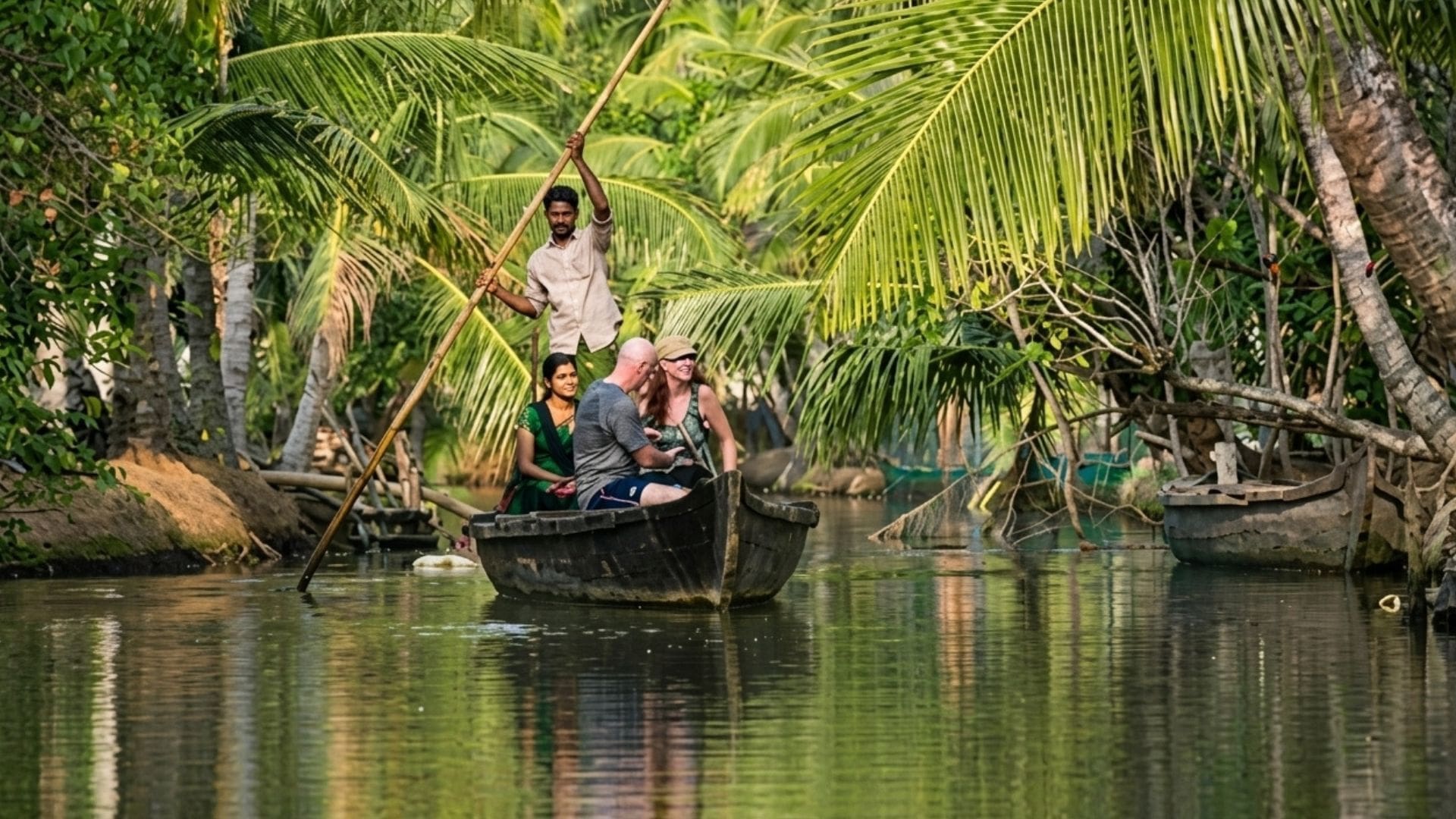
Kumbalangi Backwaters and Pokkali Fields
Kumbalangi Backwaters and Pokkali Fields remain the best spot to catch a glimpse of the glowing water.
Kallanchery, Anjilithara, and Kulakkadavu, all located within the village, provide the most regular sightings because the salty water flooded paddy fields are best for plankton to emerge.
Chellanam Coastal Belt
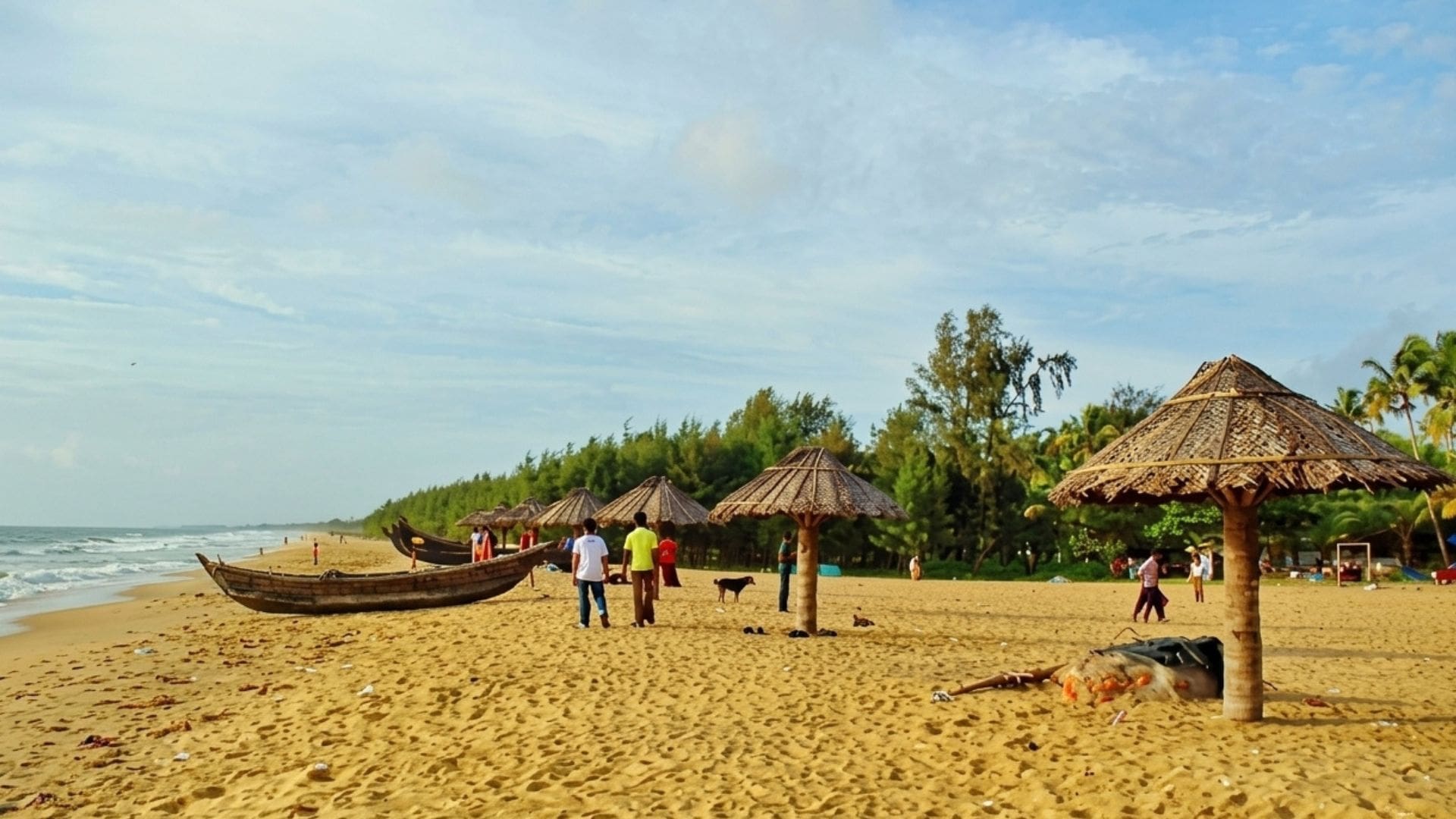
Chellanam Coastal Belt, which is a short drive away from Kumbalangi, provides the strongest glow sometimes. Local fishermen are your ultimate source of information to know which spot lights up better on any given night.

Other Nearby Villages
There are other nearby villages like Vypin, Cherayi, and Edavanakkad which have also reported good sightings. If you are staying in any of the village homestays, they might also help you with the best spots; don’t hesitate to ask.
ALSO SEE – Where to Stay in Kochi? Hotels and Tips
Kumbalangi vs Chellanam: Where Are Sightings Stronger
Each season and every year, the spots generally shift, so asking a local guide before you visit will be the smartest option.
| Location | Access | Usual Strength of Glow |
|---|---|---|
| Kumbalangi | Easy and accessible village roads | Seasonal and unpredictable |
| Chellanam | Accessible by coastal roads | Seasonal; intensity varies |
Distance From Fort Kochi to Kumbalangi
Kumbalangi is about 12 to 15 km from central Fort Kochi, which may take roughly 30 to 40 minutes of your travel time depending on the traffic situation. And if you go just a bit farther from Kumbalangi, you will reach Chellanam.
A popular option among travellers is to see Fort Kochi in daytime and make a night trip to see bioluminescence in any of the spots.
ALSO SEE-Best Things to Do in Fort Kochi- Complete List
How to Watch Kavaru Bioluminescence Safely
To get the best viewing experience, get yourself into one of the classic wooden boats, called vanji, or kayaks. Choosing boats over watching from the bank is the best choice you’d make, as each paddle stroke of the boat makes the water glow most stunningly. If you are making a video, don’t use your phone flashlight because it needs pitch darkness for the best view.
We highly recommend booking a guided night tour with local Kumbalangi homestays, since navigating through the backwater in the dark is usually not safe for non-locals, plus you’d need safety gear like life jackets. And if you are in a group, be sure to stick close together as it is easy to accidentally drift apart sometimes.
Kumbalangi Kavaru Kayaking: Costs, Booking and What to Expect
Kayaking through the Kumbalangi backwaters at night is one of the most exciting ways to experience Kavaru bioluminescence. As your paddle moves through the water, tiny plankton may produce beautiful flashes of blue light around your kayak. Guided kayaking trips are arranged by local operators and homestays, with prices varying depending on the duration, group size and services included.
It is best to book your kayaking experience in advance through a local guide or homestay, especially during the peak season from March to May. Before booking, confirm the charges, availability of life jackets, weather conditions and recent Kavaru sightings. Since bioluminescence is a natural phenomenon, sightings are never guaranteed, even during the best season.
Photography Tips for Capturing Kavaru
Capturing Kavaru bioluminescence can be challenging because the glow is often faint and short-lived. A camera with manual exposure settings can help, while a tripod is useful when photographing from stable ground. If you are kayaking, avoid handling bulky camera equipment or standing up to take photographs. Smartphones with night mode may capture some of the glow, but the colours and brightness may not look as vivid as they do in professionally edited photographs.

Kavaru Viewing Checklist
- Get the idea of the moon phase on the particular day you wish to visit
- Confirm the current best spot with local homestays or a fisherman
- Go after dusk, when the moonlight has faded
- Make a booking of a kayak and boat guide in advance
- Wear dark and comfortable clothing suited for a boat ride
- Carry insect and mosquito repellent
Other Places in Kerala Known for Sea Sparkle
Although Kumbalangi is the most famous place for Bioluminescence sightings, it is not the only one. There are plenty of places along the coast of Kerala to see the glow. You can catch a glimpse of glowing waters in other states too; some of the well-known ones are Juhu Beach in Mumbai, Bangaram Island in Lakshadweep, Betalbatim Beach in Goa, and Mattu Padukere in Karnataka.
All of these places follow the same process of Plankton blooms and depend variably on seasons and weather. Just make sure to check recent local information before visiting, as no one can easily guarantee these sightings.
Responsible Tourism Around Kumbalangi’s Backwaters
Kumbalangi is recognised as one of India’s first eco-tourism villages, and visitors have the most responsibility to maintain its status. Here are a few simple ways to be a responsible visitor:
- Skip single-use plastics: The backwaters and pokkali fields have a very fragile ecosystem, so avoid bringing plastic waste that could harm it.
- Support Local People: Book through local guides and stay at village homestays to directly support the local community.
- Keep the noise down: Stay quiet and respectful while you are on the water. This helps protect local wildlife and avoids disturbing fishermen who rely on the same waters for their livelihood.
Frequently Asked Questions
1. What is Kavaru in Kumbalangi?
Kavaru is the local name for the bioluminescence seen in the backwaters of Kumbalangi, where tiny water plankton glow when the water around them is disturbed.
2. When is the best time to see Kumbalangi bioluminescence?
March to May is generally the best time to see bioluminescence in Kumbalangi, with occasional sightings beginning in February. Dark, moonless nights offer better viewing conditions. The exact timing varies each year depending on plankton blooms, water conditions and weather.
3. Where exactly can Kavaru be seen near Kochi?
Kallanchery, Anjilithara and Kulakkadavu are among the areas around Kumbalangi worth checking during Kavaru season. Nearby Chellanam is another possible viewing location. However, the location and intensity of the glow can vary depending on local water conditions and plankton blooms. Confirm recent sightings with a local fisherman or guide before visiting.
4. Is bioluminescence in Kumbalangi guaranteed every night?
No, bioluminescence in Kumbalangi is never guaranteed. Sightings depend on the presence of bioluminescent plankton, water conditions, weather and available darkness. Even during peak season, some nights may have little or no visible glow.
5. How far is Kumbalangi from Fort Kochi?
Kumbalangi is approximately 12 to 15 kilometres from Fort Kochi, and the journey usually takes around 30 to 40 minutes by road, depending on traffic and the exact destination.
6. Is bioluminescence happening right now in Kochi?
Bioluminescence sightings in Kochi change with the season and local water conditions. The commonly reported viewing season around Kumbalangi is March to May, although sightings can occur outside this period. There is no guarantee that Kavaru is visible on a particular night. Check recent sightings with local fishermen, homestays or kayaking operators before planning your visit.



Leave a Reply